
William Gibson in his 1984 novel Neuromancer predicted that we might connect the computer to our brain. His dark story was a fiction 25 years ago, but now it becomes a reality.
We are closer than ever to interface our brain with the computer.
One of the most promising developments is BrainGate (currently during clinical trials conducted by Cyberkinetics). BrainGate consist of a sensor in the form of sophisticated micro-electrodes implanted directly into motor cortex and a decoder - dedicated software translating brain activity into useful commands for external devices. At this stage the majority of tests are conducted in patients with severe forms of paralysis, like Quadriplegia or Locked-in syndrome.
Application? Prosthetic limbs control, complex computer operation with augmented reality, therapy for neuronal-based disorder (in expansion of deep-brain stimulation).
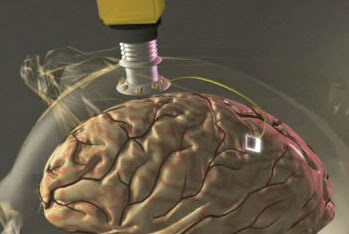
Certainly, we don't know enough about the brain at this stage to be able to create complex interfaces, but even hooking motor cortex with functional microchip will be a milestone in neurocybernetics.
Problems?
What problems? ;-)
But seriously, one outlined in this month issue of Wired is neurosecurity. Folks at the Medical Device Security Center (MDSC) showed that they could reprogram implantable hearth regulator with simple radio equipment. Now, think about your neuroimplant being hacked, and your prosthetic limb, anti-depressive brain stimulator or remote control function (;-) taken over? So MDSC is now developing encrypting security methods for neuroimplants.
A Firewall for your brain.
[photo credits: Cyberkinetics]
We are closer than ever to interface our brain with the computer.
One of the most promising developments is BrainGate (currently during clinical trials conducted by Cyberkinetics). BrainGate consist of a sensor in the form of sophisticated micro-electrodes implanted directly into motor cortex and a decoder - dedicated software translating brain activity into useful commands for external devices. At this stage the majority of tests are conducted in patients with severe forms of paralysis, like Quadriplegia or Locked-in syndrome.
Application? Prosthetic limbs control, complex computer operation with augmented reality, therapy for neuronal-based disorder (in expansion of deep-brain stimulation).

Certainly, we don't know enough about the brain at this stage to be able to create complex interfaces, but even hooking motor cortex with functional microchip will be a milestone in neurocybernetics.
Problems?
What problems? ;-)
But seriously, one outlined in this month issue of Wired is neurosecurity. Folks at the Medical Device Security Center (MDSC) showed that they could reprogram implantable hearth regulator with simple radio equipment. Now, think about your neuroimplant being hacked, and your prosthetic limb, anti-depressive brain stimulator or remote control function (;-) taken over? So MDSC is now developing encrypting security methods for neuroimplants.
A Firewall for your brain.
[photo credits: Cyberkinetics]
